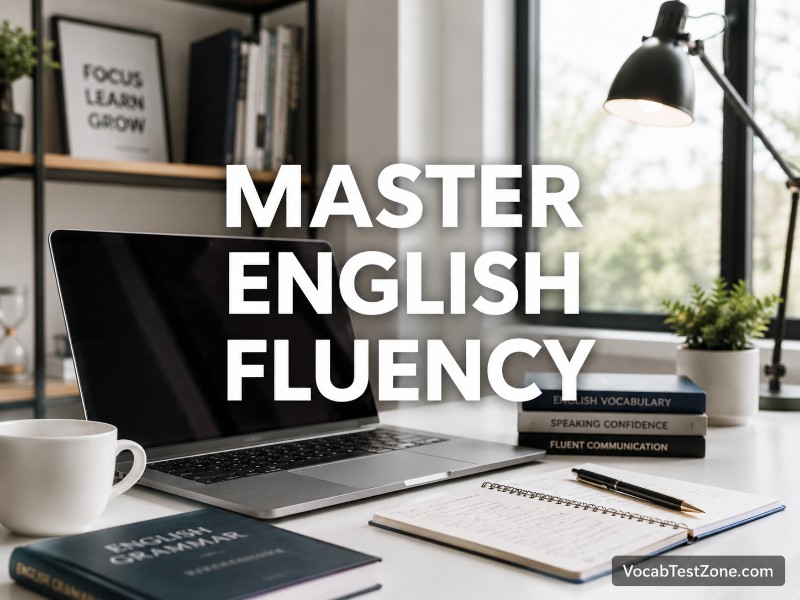
Here’s something most English learners discover a little too late: grammar rules won’t carry you. Pronunciation practice helps, sure. But vocabulary — the actual words you know and can use confidently — that’s what separates someone who survives an English conversation from someone who owns it.
VocabTestZone is built around that reality. It’s a vocabulary-focused learning platform designed to close the gap between knowing a language and actually using it well. Whether you’re a student preparing for the SAT, a professional trying to sound sharper in meetings, or someone who just wants to read American news articles without hitting a wall every few paragraphs — there’s a use case here that fits.
This guide breaks down how the platform works, who it’s best for, and what tends to actually move the needle for learners who use it seriously.
What VocabTestZone Actually Does (And Why That Matters)
Think of vocabulary learning the way you’d think about strength training. You don’t get stronger by reading about lifting. You get stronger by lifting, repeatedly, with progressive difficulty. VocabTestZone applies that same logic to language.
The platform centers on interactive quizzes, contextual exercises, and spaced repetition — a technique where words are reviewed at increasing intervals to lock them into long-term memory. That’s not a gimmick. It’s backed by decades of cognitive science research, and it’s the reason flashcard apps like Anki built devoted followings among serious learners.
Key features include:
- Vocabulary assessments that gauge your current level
- Context-based activities (words shown in sentences, not just definitions)
- Progress dashboards that show what you’re retaining and where you’re slipping
- Self-paced study options, so you don’t get locked into a rigid schedule
- Topic-based word lists you can build yourself
The context piece is worth emphasizing. Knowing that “mitigate” means “to reduce or lessen” is one thing. Seeing it used in a business report — “The new policy was designed to mitigate financial risk” — is what actually makes it stick. That’s the difference between passive recognition and active usage.
How VocabTestZone Compares to Other Learning Approaches
There are plenty of ways to build vocabulary. Here’s an honest look at how different methods stack up — because not every tool is right for every situation.
| Method | Best For | Weaknesses | VocabTestZone Advantage |
|---|---|---|---|
| Traditional flashcards | Basic memorization | No context, easy to forget | Context-based exercises replace isolated drilling |
| Reading alone | Passive exposure | No structured retention system | Progress tracking catches what reading misses |
| Language tutors | Speaking practice | Expensive, hard to schedule | Self-paced with no hourly cost |
| General apps (Duolingo, etc.) | Beginner-level habits | Surface-level vocab, gamified to distraction | Deeper word study, assessment-focused |
| VocabTestZone | Structured vocab growth | Less speaking practice | Combines testing, context, and spaced review |
The honest commentary here: no single tool does everything. VocabTestZone doesn’t replace a conversation partner or a writing coach. What it does — and does well — is give you a systematic way to grow the size and depth of your vocabulary, which makes every other aspect of language learning easier.
Who Gets the Most Out of This Platform
Students Preparing for Standardized Tests
SAT, ACT, GRE, TOEFL, IELTS — all of these lean heavily on vocabulary and reading comprehension. A larger word bank lets you move through reading passages faster, decode unfamiliar terms from context, and write with more precision. Students who treat vocabulary as an afterthought usually feel it in their scores.
VocabTestZone’s quiz structure mirrors the kind of testing format these exams use, which helps reduce test anxiety alongside actual knowledge gaps.
Professionals in English-Speaking Environments
This is an underappreciated use case. Professionals who speak English as a second language often have solid grammar but a limited range of industry-specific vocabulary. That gap shows up in emails, presentations, and client calls — not dramatically, but persistently.
Building thematic word lists around finance, healthcare, technology, or legal language (depending on your field) closes that gap gradually. Six months of 10 new words per day adds up to roughly 1,800 words. That’s a meaningful shift in how you come across professionally.
Everyday Learners Chasing Fluency
Some people aren’t chasing a test score or a promotion. They just want to feel comfortable — reading a novel, watching TV without subtitles, holding a conversation without hunting for words. For this group, consistency matters more than intensity. Short daily sessions tend to outperform occasional marathon study blocks.
Strategies That Actually Work (and One That Doesn’t)
What tends to work:
Learning words in context, not in isolation. Using spaced repetition consistently rather than cramming. Building personal word lists around topics that are actually relevant to your life or career. Writing new words in sentences — even in a journal or text messages — within 24 hours of learning them.
What doesn’t work as well:
Passive review. Scrolling through a word list right before a quiz might help you pass the quiz. It won’t help you use the word six weeks later in a real conversation.
Active usage is the bridge. If you learn “procurement” on Monday, try using it in an email by Wednesday. It feels awkward at first — that’s normal. That mild discomfort is actually your brain encoding the word more deeply.
Building a Routine That Doesn’t Fall Apart After Two Weeks
Most vocabulary routines collapse not because they’re too hard, but because they’re too ambitious. Starting with 50 words a day is a fast path to burnout. What actually tends to happen after a few months of realistic practice:
- 5 to 10 new words per day, reviewed consistently
- One short quiz session daily (10 to 15 minutes)
- Weekly review of the previous week’s words
That’s it. It’s not glamorous, but it compounds. Pair this with reading something in English daily — news articles, business publications, anything at your level or slightly above — and vocabulary growth becomes almost automatic over time.
The Long Game: Measuring Real Progress
One of the quieter benefits of VocabTestZone is that it makes progress visible. Retention rates, quiz accuracy, reading comprehension improvement — these metrics matter because vocabulary growth is notoriously hard to feel in the short term.
After 30 days, you might not notice much. After 90 days, something shifts. Words you struggled to recall start appearing in your writing naturally. Reading feels a little less effortful. Conversations move a little faster.
That’s what the long game looks like — not a dramatic transformation, but a steady, measurable expansion of what you can express and understand.
Final Thoughts
Building vocabulary in English isn’t a sprint. It’s closer to learning a musical instrument — consistent daily practice matters far more than occasional intense sessions. VocabTestZone gives you a structured environment to do that work without needing to design your own system from scratch.
The platform won’t replace every aspect of language learning. But for what it focuses on — systematic vocabulary growth, contextual learning, and honest progress tracking — it’s one of the more practical tools available to English learners in the U.S. market today.
Start with a realistic daily goal, track your retention honestly, and let the compound effect do the heavy lifting over time. That’s what actually works.

Hello, my name is Mike Nikko and I am the Admin of Deliventura. Gaming has been a part of my life for more than 15 years, and during that time I have turned my passion into a place where I can share stories, reviews, and experiences with fellow players. See more about Mike Nikko